Termites
Termite control in DeLand
Termite work is the largest job a pest control company does on a house, and the one where a little reading pays off. This page covers which termites live around DeLand, what each one leaves behind, how treatment and tenting usually go, and what Florida requires a termite contract to spell out.
Three kinds of termite around DeLand
Florida has an unusually rich mix of termites, including more established invasive species than any other state, and UF/IFAS says only a handful of them are pests. Its termite distribution map records three kinds collected in west Volusia, around DeLand, Deltona and Orange City. A dot on that map shows where a species was found at some point, not that a particular house has them today.
- Native subterranean termites. They live in the soil and reach wood through the ground or through mud tubes. Soldiers make up a far smaller share of their colonies than in a Formosan colony.
- Formosan subterranean termites. An invasive species. UF/IFAS describes colonies of several million that can forage up to about 100 meters through the soil, build carton nests inside walls and hollow out living trees. Soldiers ooze a white, glue-like drop when disturbed.
- Drywood termites. These live inside dry wood with no link to the soil: trim, furniture, attic framing. The clue is a small pile of hard pellets below a kick-out hole.
Which kind you have decides the treatment, so identification comes first. UF/IFAS keeps a guide to Florida termite types with photos if you want to compare.
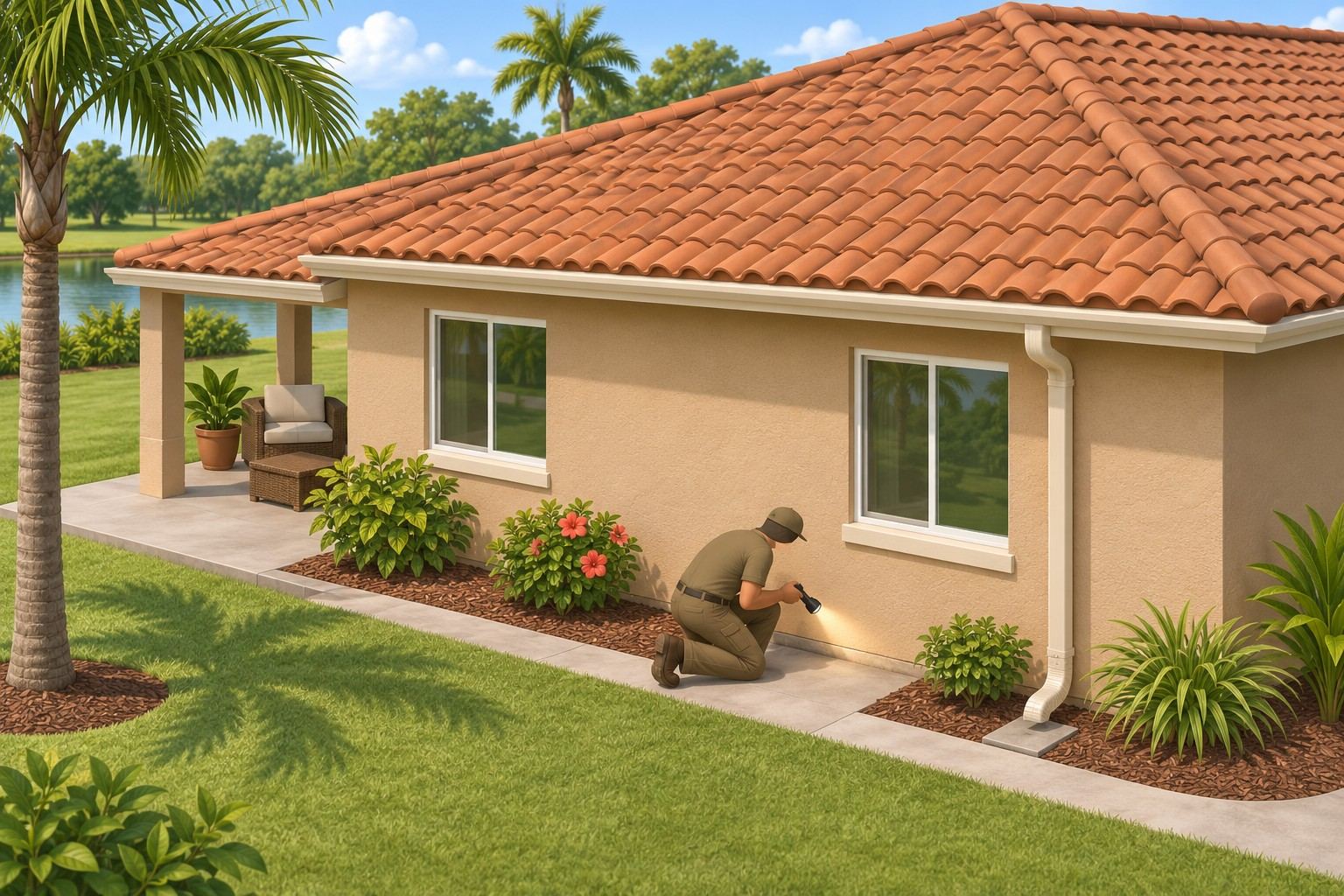
How subterranean termites get into a slab house
Concrete isn't food, and termites don't chew through it. They go around: up a crack or an expansion joint, through the gap where a pipe rises through the slab, or over the outside edge inside a mud tube. Wood or mulch piled against the wall gives them a bridge that skips the concrete altogether.
EPA's termite fact sheet lists the same weak spots and suggests filling cracks in foundations and around utility openings, fixing leaks quickly and keeping soil next to the house dry with working gutters and good grading.
A tube on the slab edge is worth a photo before anyone touches it. Inspectors look for live insects to confirm the colony is still active, because a tube on its own doesn't prove it.
- A mud tube climbing the slab edge onto the wall. Termites build these to stay damp between the soil and the wood.
- A crack or joint in the slab. Tubes can run up through it out of sight.
- The gap around a pipe where it comes up through the slab.
- Mulch and firewood piled against the wall: food and cover right at the foundation.
- A bait station set in the soil, the kind some companies use around the house.
- Soil kept wet by a downspout or sprinkler next to the slab.
Swarm season: spring evenings
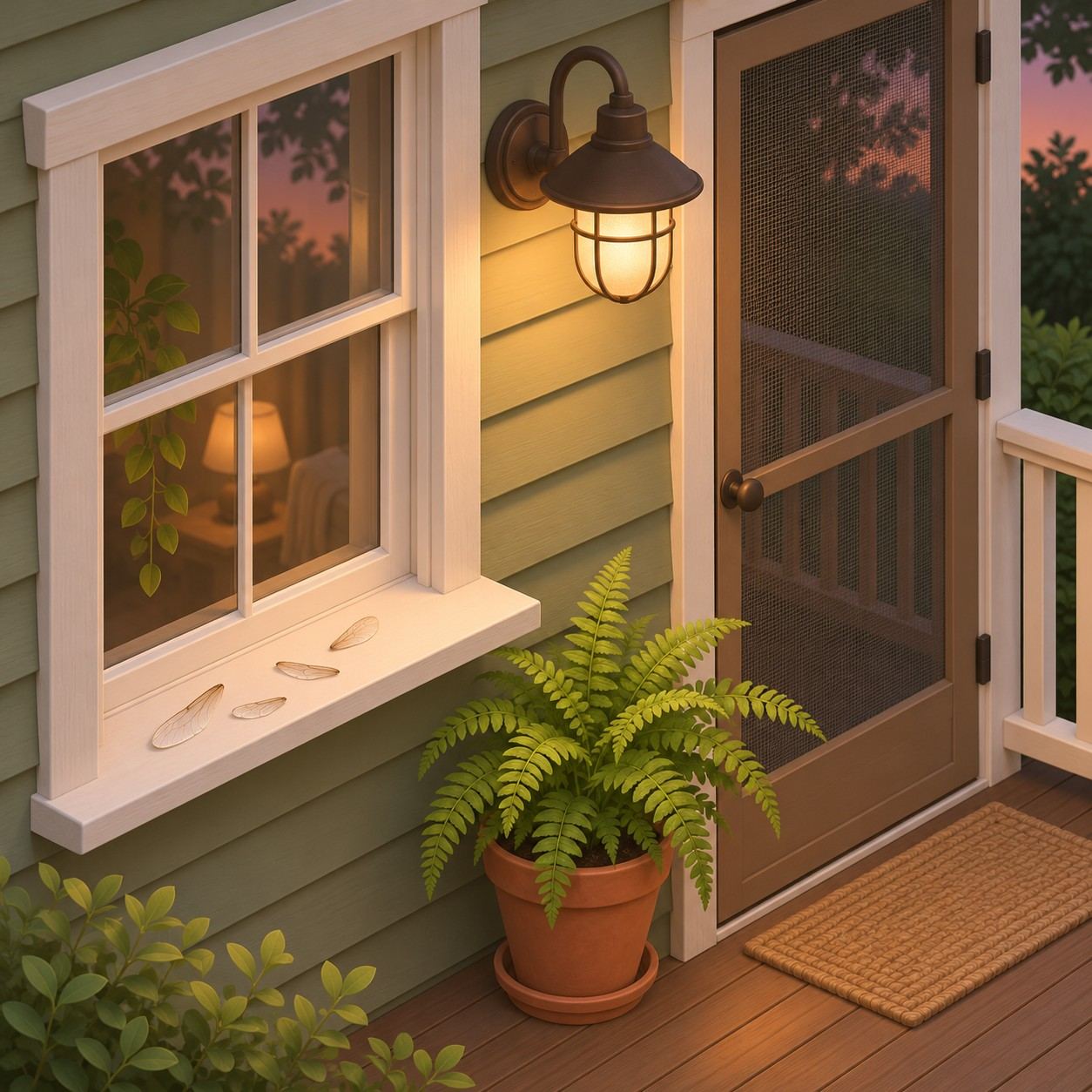
Mature colonies send out winged termites to start new ones. UF/IFAS says the Formosan subterranean termite in Florida usually swarms between early April and late June, shortly after sunset, with the most activity in May. The swarmers fly toward lights, which is why wings pile up on sills, screens and porch floors.
A swarm indoors is a stronger sign than one outside. UF/IFAS notes that when a building is infested the swarm can happen inside it, so wings in a bedroom or bathroom point to a colony already in the walls.
Flying ants swarm too. EPA's way to tell them apart: an ant's front wings are longer than its back wings and its feelers bend at an angle, while a termite's four wings are about the same length and its feelers are straight.
Pellets under a window frame: drywood termites
A UF/IFAS entomologist describes the West Indian drywood termite as established throughout Florida, more often near the coasts, and says its hard droppings are the most common evidence outside swarm season. They collect on sills, floors and shelves under the wood the colony is in.
Holes with fine, flour-like powder are usually beetles instead. UF/IFAS in Volusia County warns about powderpost beetles that arrive in wooden furniture from yard and estate sales. Both count as wood-destroying organisms under Florida law, and both are worth a professional look.
What a termite visit usually involves
Companies differ in method, but most inspections and treatments follow this order.
Inspection
The inspector walks the outside of the slab, the garage, the attic hatch and any spot you flagged, looks for tubes, damage and pellets, and probes wood that sounds hollow.
Identification
Soldiers and swarmers tell the species apart. Subterranean and drywood termites are treated very differently, so expect the company to say which one it found.
A written proposal
Florida requires a written contract for termite work, and the company has you sign a state consumer notice form before treating. Read the contract section below first.
Treatment for subterranean termites
Usually a liquid termiticide placed in the soil by trenching along the foundation or drilling through the slab, or bait stations set in the ground around the house. UF/IFAS says baits work slowly: about three months for the workers in a colony to die off.
Treatment for drywood termites
Either tenting the whole house (fumigation) or a treatment aimed at the infested wood itself. Ask which the company recommends for your house, and why.
The notice by your attic hatch
After treatment Florida law has the company post a small notice next to the attic or crawl access with the date, the product and the termite treated. Only the owner may take it down.
Tenting a house for drywood termites
Fumigation fills the sealed house with a gas, so everyone leaves, pets included. Florida has the company notify the state at least a day before a general fumigation, and the state's rules cover the inspection before the tarps go on, warning signs on the house, and a clearance check before anyone goes back in.
Get the company's preparation list in writing and ask about food, medicine, houseplants, the thermostat and when you can return. EPA advises confirming the re-entry time with the applicator, since it depends on the product label.
What a Florida termite contract has to say
Florida's rule on termite contracts (5E-14.105) is unusually specific, and it is worth having in hand when the paperwork arrives. The contract, or an exact copy, has to reach you before any work is done and before you pay anything.
If termites come back while a retreatment clause is in force, the company must inspect within 30 calendar days of your written notice and retreat within 90 days of finding them, unless you agree in writing to postpone. Put a reinfestation notice in writing and keep a copy.
Getting the house ready for an inspection
Clear stored boxes away from the garage walls and the attic hatch so the inspector can see the slab edge and get into the attic. Rake mulch back from the foundation for a few inches and move firewood away from the house. Leave any tubes, wings or pellets where they are, or bag them for the visit.
Mention a private well, a pond near the house, or a recent remodel or room addition: each can change how a company treats. If you're under contract with another company already, say so; Florida needs your signed consent before a second contract covers the same termites.
Keeping termites from coming back
Most prevention is about moisture and wood near the slab. Keep gutters and downspouts carrying water away, fix dripping hose bibs and AC condensate lines, keep shrubs and vines off the walls, and don't store lumber or firewood against the house.
UF/IFAS also suggests checking wooden items before bringing them home and lifting wooden planters, tubs and trellises off bare ground near the house. Formosan termites can live in trees, so a hollow oak close to the roofline is worth pointing out at the next inspection.
Termite questions
Can I treat termites myself?
Florida lets owners do their own pest control except fumigation. UF/IFAS is blunt about Formosan termites: they need professional treatment, and store-bought products are unlikely to work.
Are Formosan termites covered by every contract?
No. A Florida termite contract that excludes Formosan or another invasive species has to name it, so read the first pages before you sign.
How soon after a swarm should I call?
A swarm means a mature colony nearby, and an indoor swarm points to one in the house. Call while the wings are still there to show the inspector.
Do bait stations replace a liquid treatment?
They're a different approach. Baits are slower and aim at the colony; liquids protect the soil around the house. The company should explain why it suggests one, the other or both.
Looking at it right now?
Phone and describe what turned up and where. The person who answers works for a pest control business near DeLand, and whether to book a visit stays your decision.