For buyers and sellers
Buying a home in DeLand: the termite (WDO) report
A wood-destroying organism (WDO) inspection is how a Florida pest control company reports on termites and other wood pests for a home sale. Knowing what the report covers, and where it stops, makes it far more useful.
What the report is
When a licensed pest control company inspects for wood-destroying organisms as part of a home sale and charges for it or is asked for a written report, Florida law (s. 482.226) has it use the state's own report form. Florida's list of wood-destroying organisms is termites, powder-post beetles, old house borers and wood-decaying fungi, and the inspection must look for all of them.
- the company's name, the inspection date and the address
- visible, accessible areas that weren't inspected, and why
- areas that were inaccessible
- visible signs of earlier treatment or infestation
- any organisms found and any visible damage
- where the inspection notice was posted on the property
The report also certifies that neither the inspector nor the company has a financial interest in the property or any role in the sale. It doesn't promise there are no termites or damage unless it says so and states how far that promise goes.
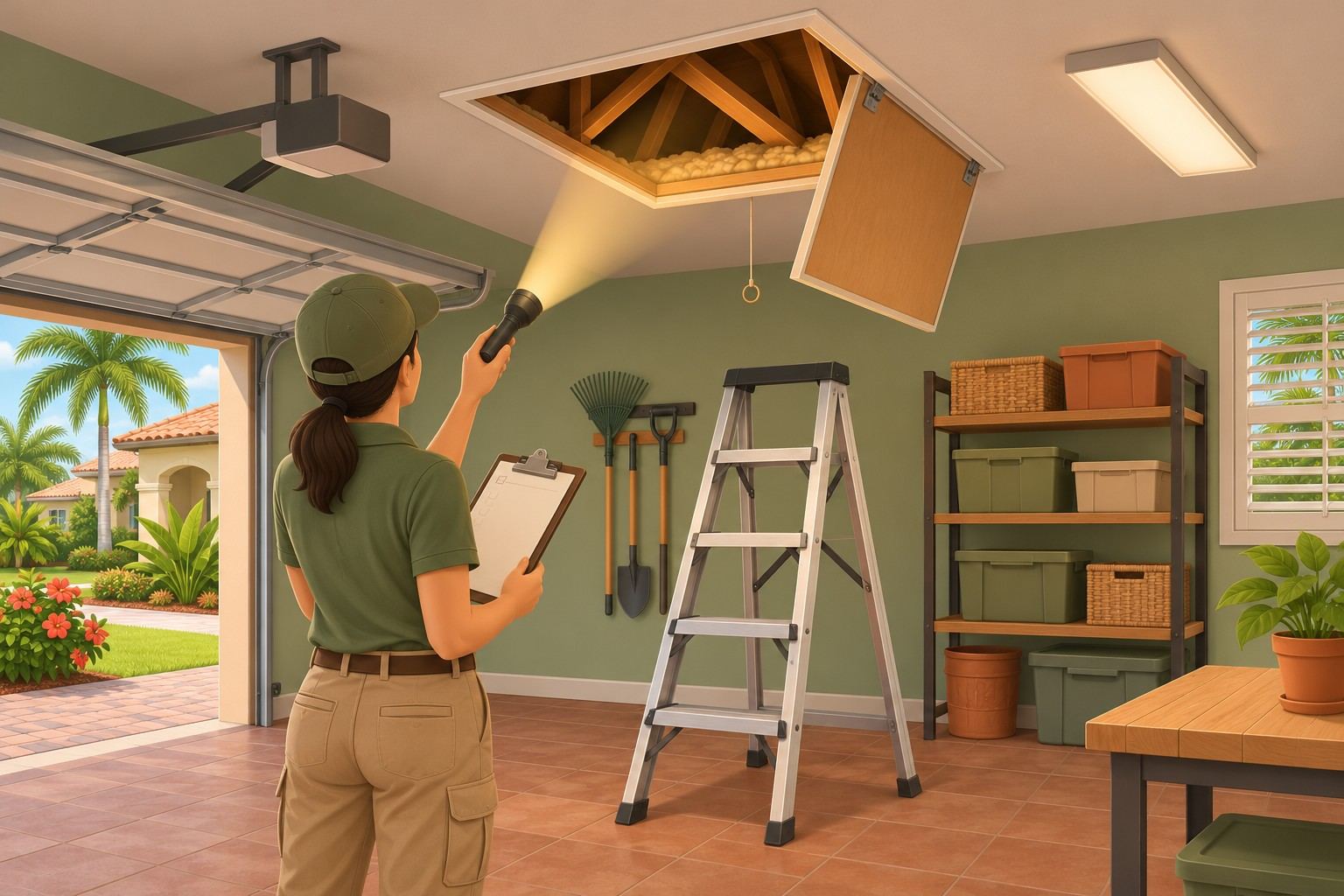
What the inspection can't see
The state's inspection standard (rule 5E-14.142) covers areas reachable by normal means. It doesn't cover spaces that are enclosed or behind wall coverings, floor coverings, furniture, stored belongings or insulation, or anything that would mean removing or damaging part of the house. The inspection is visual, with probing and sounding of wood where there's a sign of trouble.
So a packed garage or a blocked attic hatch shrinks the inspection. Sellers who clear the walls and the hatch, and buyers who ask for it, get a more complete report.
The small notice by the attic hatch
Florida companies post a notice next to the attic or crawl-space access after a WDO inspection, and another after treating for wood-destroying organisms. A treatment notice gives the date, the product and the organism treated. Only the property owner may remove these notices, so in an older house they can tell a buyer a lot about past termite work.
Ask the seller whether a termite contract is in force, which company holds it, what it covers, and whether it can be transferred to you. A contract covering subterranean termites only won't help with drywood termites, and Florida requires the first page to say which.
During the inspection period
Book the inspection early
Leave time for a follow-up visit or treatment before closing if something turns up.
Ask for the areas not inspected
And whether a second look is worth it once furniture or boxes are moved.
Read the evidence line carefully
Past treatment with no live activity is different from active termites.
Get treatment terms in writing
If the seller agrees to treat, ask for the contract and who it names as the property owner after closing.
Companies that do these inspections must carry professional liability insurance, a bond or a set net worth under Florida rules. The choosing a company guide shows how to check the license and the categories.
WDO questions
Does a clean report mean there are no termites?
No. It reports what was visible and accessible on that day. Hidden areas aren't covered unless the report says otherwise.
Can a company that wants to sell me treatment do the inspection?
The report has to certify the inspector has no financial interest in the property or the sale. Treatment offered afterward is a separate decision; you can compare it with another company's offer.
Where can I get termites identified?
UF/IFAS runs a termite identification service for samples and photos with a location.
Looking at it right now?
Phone and describe what turned up and where. The person who answers works for a pest control business near DeLand, and whether to book a visit stays your decision.